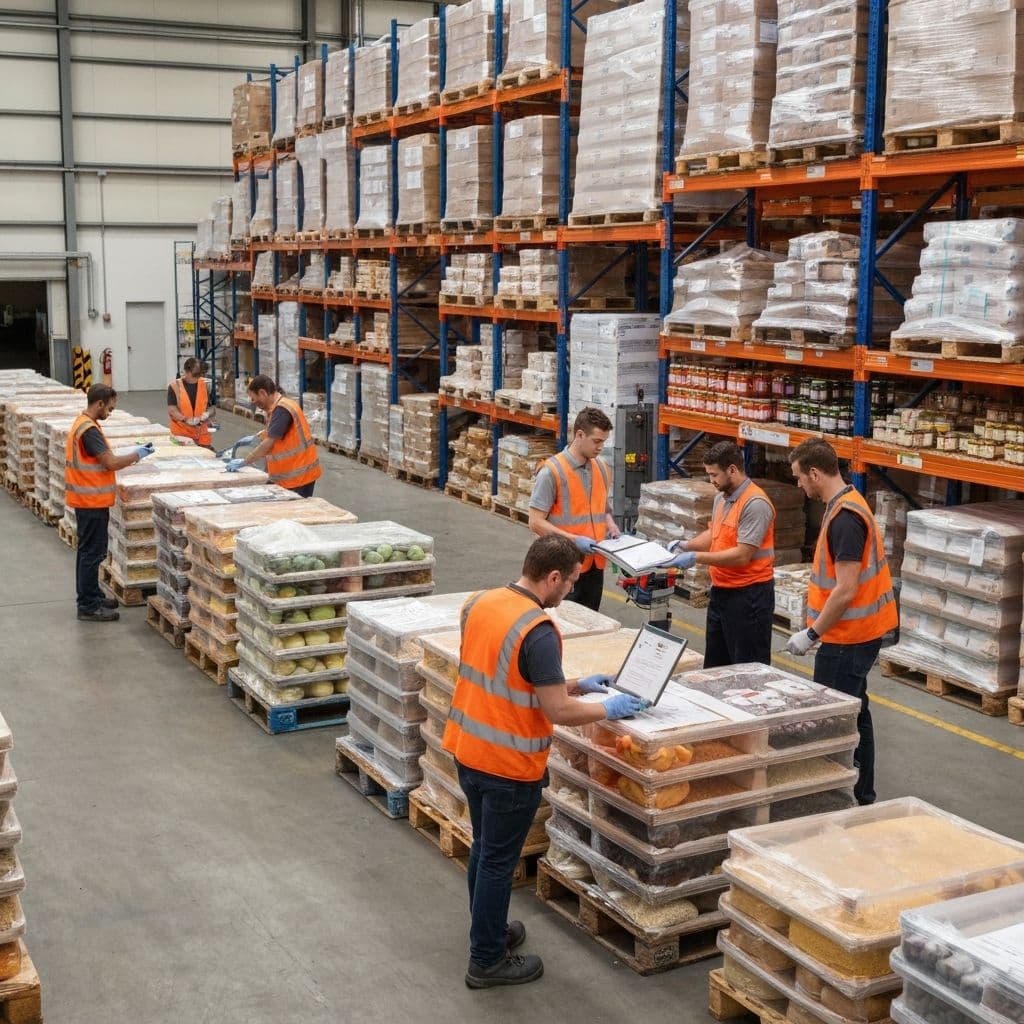
In food manufacturing, some of the biggest risks come from very small traces.
Allergen control is a perfect example. A shared line, a missed cleaning step, a mislabeled ingredient, a packaging mix-up, or a rushed changeover can create a serious consumer safety issue.
FSMA's preventive controls framework requires food facilities to identify known or reasonably foreseeable hazards and implement preventive controls when needed to significantly minimize or prevent those hazards. For many manufacturers, allergens are one of the most important hazards to control.
This is where compliance becomes very practical.
Are allergen-containing ingredients clearly identified? Are storage areas controlled? Are changeovers validated? Are sanitation steps documented? Are labels verified before packaging runs? Are rework procedures controlled? Are employees trained for the actual complexity of the facility?
The challenge is that allergen risk often hides in the handoffs.
Purchasing approves a new ingredient. R&D updates a formula. Production changes the run schedule. Packaging uses similar-looking labels. Sanitation signs off on the line. Quality verifies release.
If those handoffs are disconnected, risk increases.
What manufacturers should pay attention to:
Allergen control should be built into scheduling, labeling, sanitation, supplier approval, training, and finished product release — not treated as a final check.
Bottom line: Allergen compliance is not about one department being careful. It is about the whole operation moving in sync.